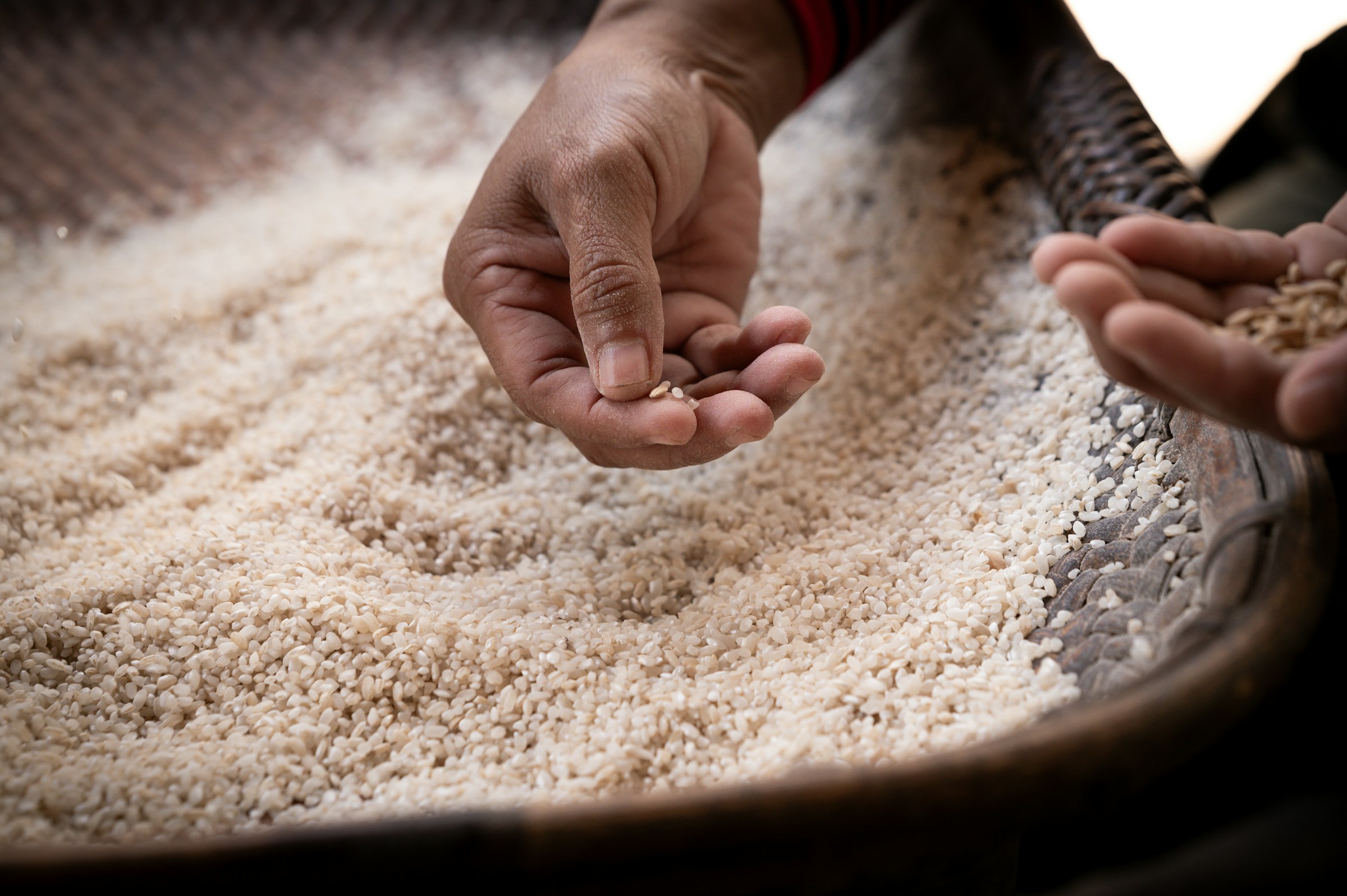
Just as Japanese sake can’t be made without koji, Korean traditional liquor can’t be made without nuruk (누룩). Nuruk is grain — wheat, rice and others — crushed, kneaded, shaped and left to rest, so that wild microbes settle in and build up the power to ferment. In short, it is a fermentation starter for making liquor.
Not one microbe, but many lives
Japanese koji is grown by cultivating one carefully selected mold on steamed rice. Nuruk, by contrast, is home to many microbes living together — molds, yeasts, lactic acid bacteria. This diversity creates the rich aroma, gentle acidity and complex finish of makgeolli and yakju.
The “deep, earthy aroma” in the clear top of OLKE, or the “soft, yogurt-like acidity” of Gyeong Takju Rosé — much of that character comes from nuruk and fermentation.
Nuruk is the brewery’s personality
Which grain to use, what shape to press it into, where and for how long to let it rest — every brewery makes nuruk differently, and that becomes the personality of its liquor.
- Seonsan Brewery uses a traditional starter handed down within the family to revive a house liquor from 500 years ago.
- KANG SUNGGOO BREWERY (OLKE) brews only with natural nuruk made the traditional way, with no artificial sweeteners or additives.
- Doorumi Brewery’s “29” is a yakju brewed with rice koji and wheat nuruk, with edible chrysanthemum.
That is why two makgeolli can taste astonishingly different side by side.
What “koji (wheat)” on the label means
When the ingredients of Korean liquor at BISHUKAN list “koji (wheat),” this usually refers to nuruk, which is widely made from wheat. If you have a wheat allergy, please take care; each product page lists all ingredients.
A tasting tip
On the first sip, pay attention to aroma and acidity rather than sweetness. Behind them, you may sense the air of that brewery.
Featured in this story


Drinking by persons under 20 is prohibited by law in Japan.