“Isn’t all makgeolli the same?” If that’s what you think, these are the five bottles we’d most like you to try. Different makers, strengths and flavors — taste them side by side, and the depth of Korean traditional liquor comes into view.
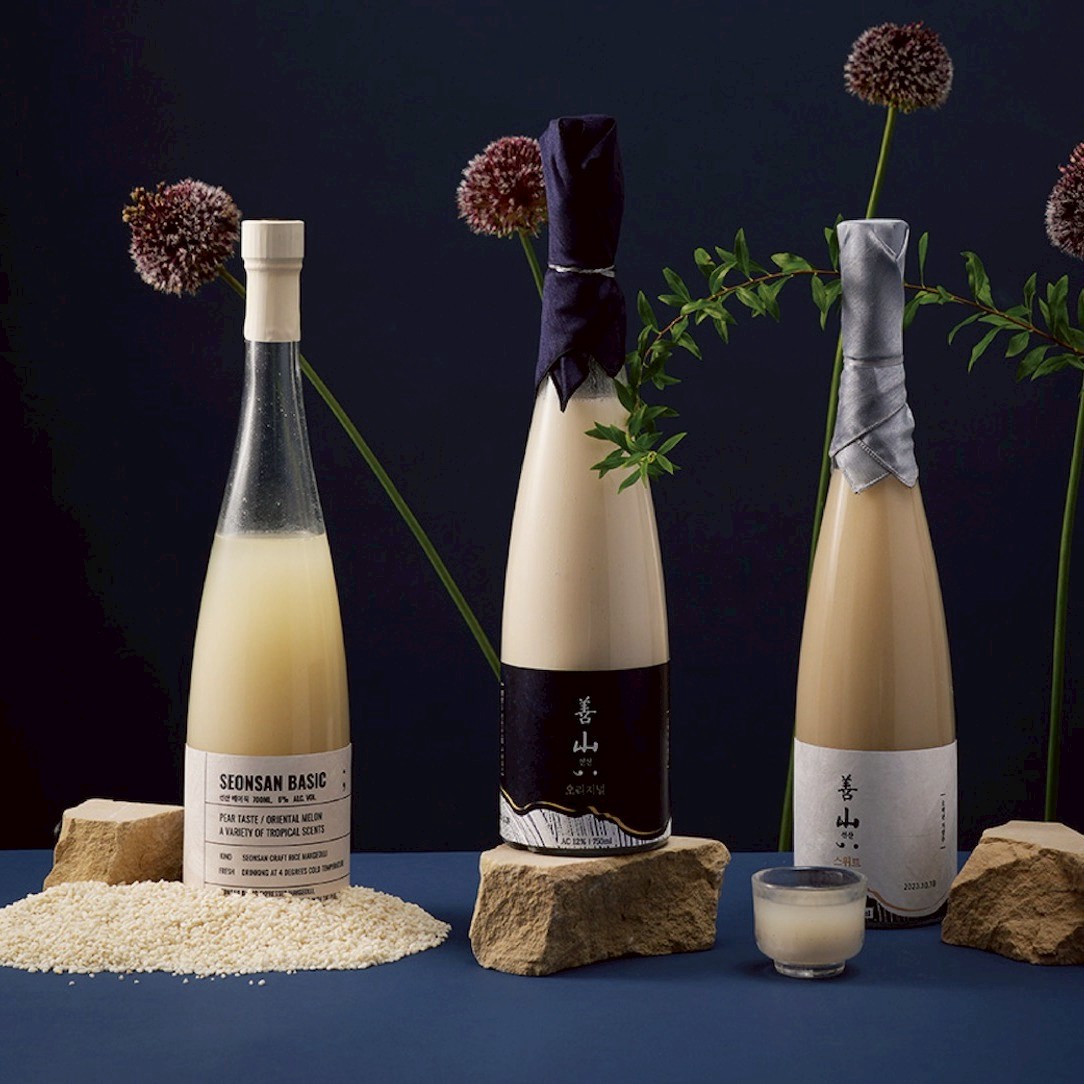
1 | Seonsan Myeongga Myeongju 9 (Seonsan Brewery)
A revival of a house liquor said to have been presented to the king by a noble family of Seonsan in the 15th century. 100% non-glutinous rice, no artificial sweeteners. Almost no fizz, with a refined, clean, wine-like finish. A food-friendly first bottle that suits jeon and hot pot as well as Japanese simmered dishes and grilled fish.
For: anyone who wants to know “real” makgeolli first
2 | An Old Song (Doorumi Brewery)
Born from a song by the duo Standing Egg. Made only from rice, rice koji, plum blossoms and yeast; fermented 40 days and aged 40 more. Gentle fruit aromas and a faint plum-blossom finish. Grand Prize, 2025 Korean Liquor Awards.
For: quiet evenings with a wine glass
3 | OLKE (KANG SUNGGOO BREWERY)
12% ABV. Handmade unpasteurized makgeolli from Korean glutinous and non-glutinous rice with natural nuruk only. One glass unshaken, one glass shaken — two expressions in one bottle.
For: lovers of natural wine and aged flavors
4 | Boksoondoga Handmade Makgeolli (White)
From Ulsan, Korea. Very fine particles and a smooth texture without the usual heaviness. For a toast, or alongside a meal.
For: anyone who wants to start with something light and easy
5 | Gyeong Takju Rosé
Produced by Korean singer Sung Si-kyung. A 12% unpasteurized makgeolli colored a soft cherry-blossom pink with red yeast rice alone — no colorings, fruit or flavorings. Melon- and peach-like aromas with a soft, yogurt-like acidity.
For: gifts, or a glass for a special day
To taste them side by side
Go from light to strong: Boksoondoga (6.5%) → Myeongga Myeongju 9 (9%) → An Old Song (10%) → Gyeong Takju Rosé (12%) → OLKE (12%). Pour a little of each into identical glasses to see the differences clearly.
Featured in this story
 Seonsan Myeongga Myeongju 9 750ml¥3,300 (tax incl.)View in shop →
 An Old Song 750ml (Doorumi Brewery)¥5,940 (tax incl.)View in shop →
 OLKE 12% 750ml¥8,800 (tax incl.)View in shop →
 Boksoondoga Handmade Makgeolli (White) 935ml¥3,600 (tax incl.)View in shop →
 Gyeong Takju Rosé 12% 500ml¥4,600 (tax incl.)View in shop →
Drinking by persons under 20 is prohibited by law in Japan.